

Shrink/Skimpflation: The New Risk to Growth
As companies fight margin pressure, hidden reductions in size or quality can quietly erode trust, pricing power, and growth
May 26, 2026
Author: Antoinette Turner
Reading time: 8 min
SHARE




• Regulators, retailers, and consumers now watch product size and quality changes more closely than ever before
• Shrinkflation once protected margins quietly, but in 2026 it can seriously damage customer trust and future growth
• Skimpflation is more dangerous because customers may not prove quality dropped, but they clearly feel the brand changed
• Good price-pack strategy gives each size a clear consumer purpose, such as trial, convenience, or lower entry price
• The winners will not hide inflation; they will redesign value so customers still feel respected and fairly treated
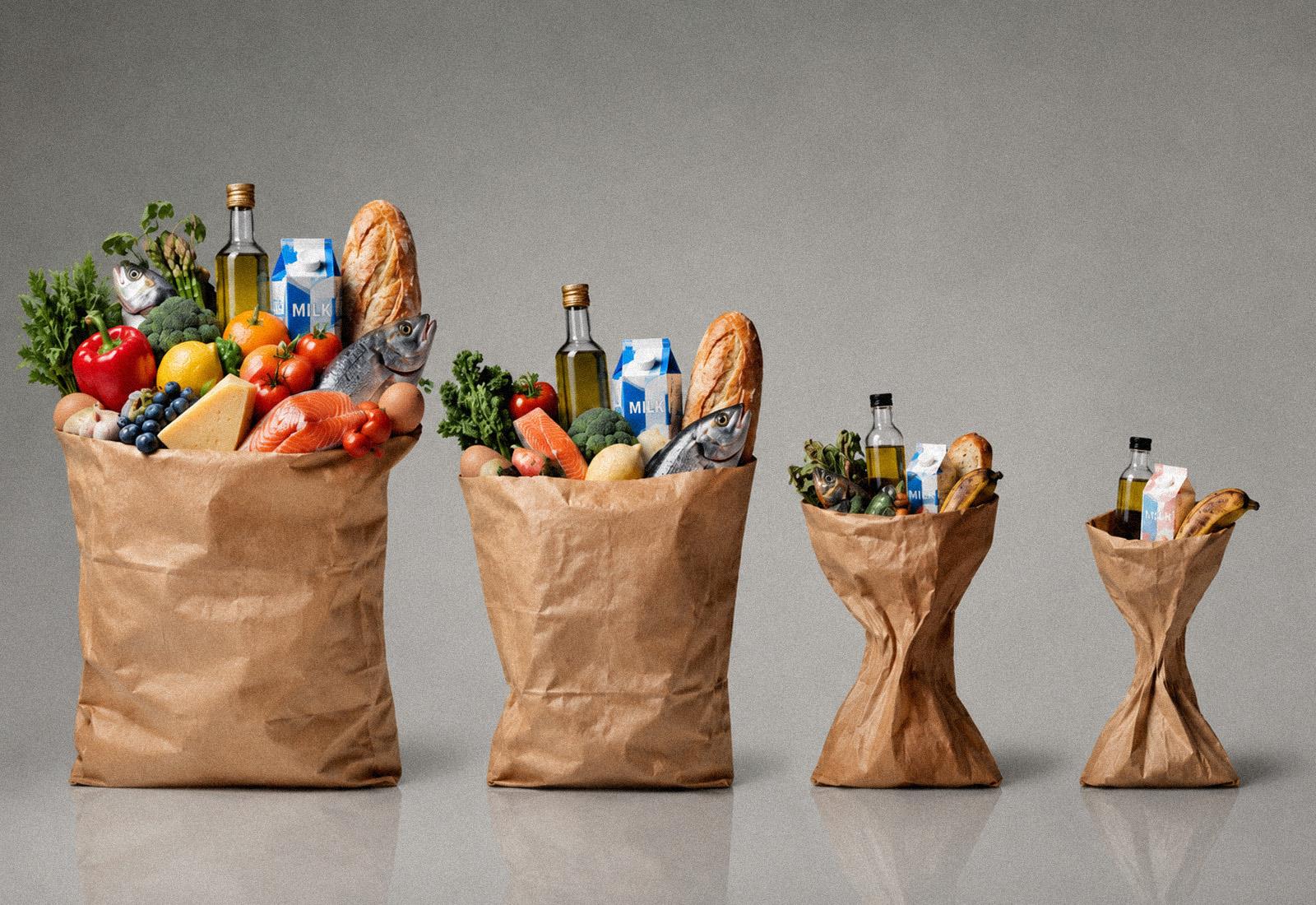
For much of the last decade, shrinkflation was treated as a tactical pricing instrument. A company could reduce the size of a pack, keep the shelf price stable, preserve margin and avoid the political and consumer backlash of a direct price increase. Skimpflation was the quieter cousin of the same idea: reduce ingredient quality, weaken service, simplify the experience or remove small benefits while keeping the headline price intact.
The margin shortcut has become visible
In 2026, this logic has become much more dangerous. The economics may still look attractive in the spreadsheet. But the reputational equation has changed. Consumers are more price sensitive, retailers are stronger, regulators are more attentive and private label is more credible. McKinsey’s April 2026 consumer goods report warns that the “slow erosion of value” in food and beverage is accelerating and that leaders must sharpen value propositions or risk ceding ground. For CEOs, CFOs and CMOs, that is the central issue: not whether costs are rising, but whether the brand still deserves the customer’s trust.
The new boardroom fear
The first fear is legal visibility. Austria’s Anti-Deceptive Packaging Act came into force on April 1, 2026, requiring clearer consumer information in defined cases where product quantity is reduced, packaging remains broadly similar and unit price rises by at least 3 percent. DLA Piper’s global guide also notes that shrinkflation is gaining worldwide regulatory attention, with specific European rules or proposals in countries including Austria, France, Hungary, Romania and Italy.
The second fear is social visibility. In May 2026, a German court ruled against Mondelēz over Milka chocolate after bars were reduced from 100 grams to 90 grams while the familiar packaging remained largely unchanged. FoodNavigator reported that the court found weight labelling alone insufficient to prevent consumer confusion. This case matters because it transforms a technical packaging decision into a warning about brand memory. If familiar design is used to conceal a reduction, the packaging itself becomes a trust liability.
Shrinkflation is measurable. Skimpflation is psychological.
A customer can compare grams, millilitres or units. It is harder to prove that a chocolate tastes weaker, a detergent performs less well, a hotel experience feels thinner, a garment wears out faster or customer support has become slower. But customers do not need laboratory evidence to change behaviour. They only need the feeling that the brand is not what it used to be.
That makes skimpflation more dangerous for premium and mainstream brands than shrinkflation. A smaller pack says, “You gave me less.” A weaker product says, “You broke the promise.” Reuters reported in May 2026 that lower cocoa prices were helping some chocolate producers return to real cocoa after earlier cost-saving shifts toward alternatives, while Brazil introduced cocoa content standards for dark chocolate. The strategic lesson is simple: recipe integrity and product truth are becoming commercial assets, not just manufacturing details.
The private label threat
The most dangerous competitor in this environment may not be another global brand. It may be the retailer’s own label.
McKinsey and EuroCommerce’s April 2026 grocery report describes European grocery as a market under margin pressure but with renewed momentum from private label, adjacencies, mergers, acquisitions and artificial intelligence. Private label is no longer only a low-cost alternative. In many categories, it has become a credible value proposition with improving quality, modern packaging and strong retailer support.
This matters globally. In Europe, Canada, Australia and parts of Asia, retailers can now use shrinkflation by national brands as a strategic opening. Their message is simple: our product is clearer, cheaper, larger or more honest. Once that story works, the branded manufacturer loses more than volume. It loses shelf power, pricing authority and emotional preference.
The global signal is spreading
The pattern is not confined to Europe. In the United States, new reporting on Marketing Science research found that downsizing in the U.S. retail food market was more than five times as prevalent as upsizing when measured by total sales, and that many consumers may pay more without realizing it because they receive less product for the same price.
In Singapore, official statistics released in April 2026 found that less than 5 percent of monitored household items experienced shrinkflation in 2025, with categories such as instant coffee or tea, laundry detergent, ice cream, milk powder and diapers among the most affected.
In Canada, Statistics Canada reported that food purchased from stores rose 4.4 percent year over year in March 2026, keeping grocery affordability under pressure. In Australia, parliamentary material for 2026 points to stronger grocery pricing rules and a ban on excessive pricing by very large retailers from July 1, 2026. In Latin America, the evidence is less about new shrinkflation regulation and more about structural food-price pressure, with Brazilian reporting in May 2026 noting that food prices rose far above overall inflation over a 20-year period.
The geography differs. The business risk is the same: consumers are questioning value.
The CFO trap
The CFO’s temptation is understandable. A smaller pack can improve unit economics. A cheaper ingredient can defend gross margin. A reduced service level can protect the P&L. But the financial model often recognizes the benefit immediately and the damage too late.
The delayed costs appear in less visible places: lower repeat purchase, more aggressive promotion dependency, weaker willingness to pay, poorer reviews, retailer pushback, lower brand consideration and faster switching to private label. A board should ask one question before approving any shrinkflation or skimpflation move: would we still approve this if every customer noticed it tomorrow?
If the answer is no, the move is not strategy. It is reputational borrowing.
The better growth playbook
The answer is not to avoid every price increase, pack change or portfolio redesign. That would be naïve. Input costs, wages, energy, logistics, regulation and currency volatility still matter. Companies need margin discipline. But they need it with a stronger value architecture.
First, separate hidden reduction from designed value. Smaller packs can work if they serve a clear role: portion control, trial, convenience, reduced waste, lower entry price or premium concentration. Revenue Management Labs argued in April 2026 that consumer goods pricing is shifting toward disciplined price-pack architecture, analytics and channel-specific execution rather than broad price increases.
Second, protect the hero product. Do not quietly weaken the SKU that carries the brand’s memory. If quality must change, improve something visible at the same time.
Third, make unit value easier to understand. The brands that win will not hide behind packaging design. They will make quality, quantity, performance and use-case value obvious.
Fourth, measure trust as a financial asset. Add shrinkflation and skimpflation risk to brand tracking, social listening, repeat-purchase analysis and retailer negotiations.
From hidden value to visible proof
If shrinkflation and skimpflation create one central business problem, it is this: customers begin to doubt the fairness of the exchange. They ask whether they are getting less product, weaker quality, poorer service, or a less generous customer experience for the same money. Once that doubt enters the relationship, advertising alone is not enough to remove it.
This is where credible third-party recognition can play a strategic role. The Best Buy Award, QUDAL – Quality Medal, and Customers’ Friend, developed by ICERTIAS from Zurich, do not solve inflation, cost pressure, or margin compression. They do something different. They help companies make the value they still deliver easier to see, easier to understand, and easier to trust.
For C-level leaders, that distinction matters. In 2026, the strongest brands will not simply claim that they offer value, quality, and care. They will need to make those claims believable in an environment where consumers, regulators, retailers, and social media are increasingly alert to hidden reductions.
Best Buy Award makes value visible
The Best Buy Award is most relevant when the central consumer question is: “Is this still worth the money?”
That is exactly the question created by shrinkflation. When a pack becomes smaller or a price per unit rises, the consumer may not immediately calculate the change. But the consumer does begin to question fairness. In categories where private label is stronger, promotions are frequent, and switching costs are low, that question can quickly become a loss of volume.
Best Buy Award helps because it is built around the perception of the best price-quality ratio, or value for money, in a defined category, country, and period. ICERTIAS states that Best Buy Award and QUDAL are based on independent consumer research, using unaided consumer responses rather than company applications.
For companies, this has practical value. A brand that earns Best Buy Award can use the recognition to support a value message without reducing itself to cheapness. This is important because “best value for money” is not the same as “lowest price.” It means that consumers perceive the total exchange as attractive: the price, the quality, the reliability, the usefulness, and the overall experience.
In a shrinkflation-sensitive market, that can help defend pricing power. It can also help consumers make faster choices in crowded categories where many offers look similar but do not feel equally trustworthy.
QUDAL - Quality Medal protects quality memory
Skimpflation is more dangerous because it attacks the customer’s memory of quality. The customer may not know exactly what changed, but they know the product no longer feels the same. A chocolate tastes weaker. A detergent performs less convincingly. A garment feels cheaper. A service interaction feels thinner. The brand’s promise begins to lose emotional credibility.
QUDAL – Quality Medal is relevant precisely because it is not a price award. ICERTIAS describes QUDAL as a recognition of the brand, product, service, or institution that respondents in a specific market perceive as delivering the highest level of quality in a clearly defined category, country, and time period. It explicitly focuses on perceived quality rather than affordability or price-quality ratio.
That makes QUDAL strategically useful in a skimpflation environment. It gives management and consumers a quality-centered signal at a time when many buyers fear that brands are quietly lowering standards. For a premium or mainstream brand, this matters because willingness to pay depends on the belief that the product remains meaningfully better.
The crucial point is discipline. QUDAL should never be used as cosmetic cover for a weaker product. Used well, it reinforces a real strategic commitment: even under cost pressure, the brand continues to compete on quality that customers actually recognize.
Customers’ Friend protects the relationship
Shrinkflation and skimpflation are often discussed as product problems. But in many sectors, the real deterioration happens in service.
A telecom operator may make customer support harder to reach. A bank may push clients through impersonal digital processes. An airline may remove services that used to be included. A retailer may make complaints slower and returns more complicated. A hotel may reduce housekeeping while keeping the same rate.
This is service skimpflation. It may not appear on a label, but customers feel it immediately.
Customers’ Friend can help companies address this risk because it is focused on the customer relationship, not only the product. ICERTIAS materials describe Customers’ Friend as a recognition connected with customer experience, communication, complaint handling, care, and customer-facing performance.
For companies, the value is clear. When cost programs push management to automate, simplify, reduce staffing, or move customers into cheaper channels, Customers’ Friend can serve as a reminder that efficiency must not become abandonment. For consumers, it can act as a signal that the company is not only selling a product or service, but also taking responsibility for the experience after purchase.
In categories where products are similar, customer care can become the deciding point of loyalty. That makes Customers’ Friend especially relevant for banking, insurance, telecom, retail, travel, hospitality, energy, health-related consumer services, and e-commerce.
The three signals work together
The deeper strategic value appears when the three ICERTIAS recognitions are understood as a trust architecture.
Best Buy Award answers the value question: “Am I getting a fair exchange for my money?”
QUDAL answers the quality question: “Is this still perceived as one of the best-quality choices?”
Customers’ Friend answers the relationship question: “Will this company treat me properly before and after purchase?”
These are exactly the three anxieties created by shrinkflation and skimpflation. Consumers worry they are receiving less value, weaker quality, and poorer care. Companies that can credibly address all three concerns are better positioned to protect loyalty, defend margins, and grow share without relying only on discounts.
Not camouflage, but discipline
There is, however, an important warning for boards. Certifications and trust marks are not a substitute for real value. They cannot rescue a company that quietly reduces size, weakens quality, cuts service, and then expects a medal or seal to neutralize customer disappointment.
That would be reputationally dangerous. The stronger the trust symbol, the greater the backlash if consumers feel it is being used to distract from a weaker offer.
The right sequence is different: protect the real customer exchange first, measure perception honestly, then communicate clearly. In that order.
For CEOs, CFOs, and CMOs, this is the leadership lesson. Certifications should not be treated as marketing decoration. They should be used as external signals within a broader discipline of value, quality, and customer respect.
A better growth question
The old question was: “Can we reduce cost without customers noticing?”
The better question is: “Can we redesign the offer so customers still clearly see value, quality, and care?”
That question leads to stronger decisions. It supports smarter pack architecture, clearer unit value, higher quality discipline, better service design, and more responsible communication.
In 2026, the brands that grow will not be those that hide inflation most cleverly. They will be those that make value easier to recognize.
Best Buy Award can make value for money more visible. QUDAL – Quality Medal can make perceived quality leadership more visible. Customers’ Friend can make customer care more visible.
And in a market where consumers increasingly fear that brands are giving them less while asking for more, visibility is no longer a communication benefit. It is a growth strategy.
Trust Is the New Margin Discipline
The companies that grow will not hide reductions better; they will make value, quality, and care easier to believe.
Shrinkflation and skimpflation are no longer small pricing adjustments. They are tests of corporate character. In 2026, customers, retailers, regulators, and social media are increasingly able to detect when companies give less while asking for the same or more. The immediate financial gain may look rational, but the long-term cost can be much higher: weaker trust, lower loyalty, stronger private label switching, and reduced pricing power.
The strategic answer
The better path is not denial, concealment, or cosmetic reassurance. It is disciplined value design. Companies need smarter pack architecture, visible quality commitments, clearer unit value, stronger customer care, and credible external signals. ICERTIAS recognitions can support this discipline when they are used honestly: Best Buy Award makes value for money more visible, QUDAL – Quality Medal makes perceived quality more visible, and Customers’ Friend makes customer care more visible.
In 2026, growth will belong to brands that treat trust as a financial asset, not a soft marketing idea. Companies may protect margins for a quarter by hiding reductions in size, quality, or service, but they risk damaging the very confidence that supports long-term pricing power, loyalty, and market share.
The stronger path is not to conceal cost pressure, but to redesign value clearly. That means making the offer easier to understand and easier to believe: clearer pack sizes, smarter portion logic, stronger quality cues, simpler pricing, improved service, and more visible benefits. Customers should immediately see why the product or service is still worth choosing.
The winners will communicate honestly, protect the quality memory of their brands, and make customer care visible before suspicion becomes switching.
In 2026, the real risk is not that customers notice smaller packs or weaker products. It is that they conclude the brand no longer respects them