

Tesla’s Flying Roadster: Innovation as Brand Power
Tesla’s Roadster launch demonstrates how innovation captures attention, but lasting business success depends on product delivery and customer trust
October 15, 2026
Author: Matt Lathbury
Reading time: 14 min
SHARE




• Tesla's new Roadster amazed people with spectacular aerial stunts, showing impressive engineering capabilities and attracting worldwide attention through innovation
• The launch reached investors, potential buyers, and the wider public, but each group needs different reasons to trust Tesla
• Exciting demonstrations attract attention and generate publicity, but useful features, reliable products, and satisfied customers ultimately determine business success
• As AI-generated videos become more convincing, companies need independent witnesses and clear evidence to prove their extraordinary demonstrations are real
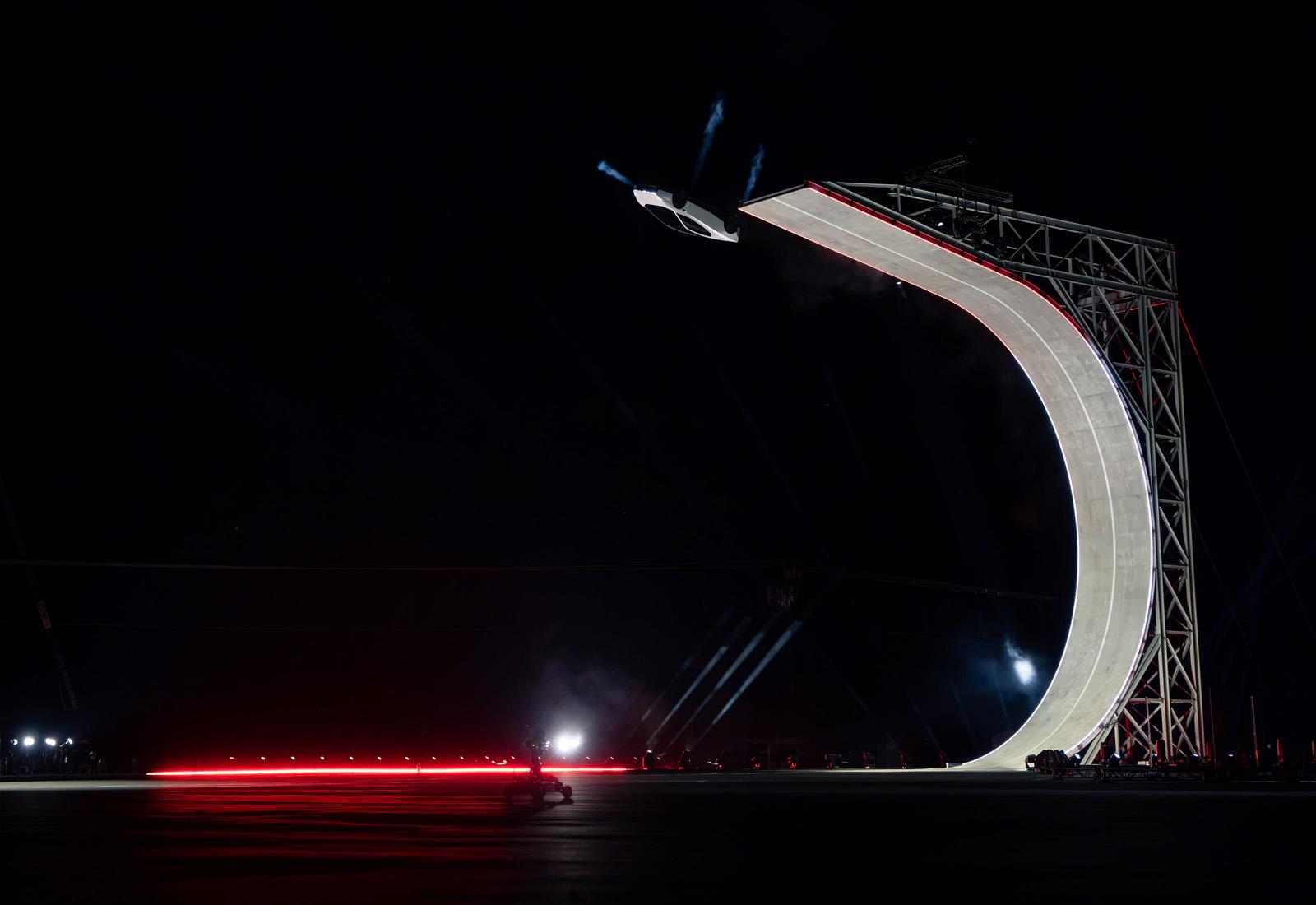
On October 15, 2026, at SpaceX's test site in McGregor, near Waco, Texas, Tesla unveiled its new Roadster in a manner few product launches have attempted. The car drove along an inverted ramp, rotated in midair, and landed on its wheels. Later, it lifted itself over a row of Tesla vehicles.
TechCrunch reported on October 15 that the car uses 10 thrusters fed by 600 liters of compressed air, according to engineering vice president Lars Moravy. Reuters reported the same day that the vehicle cleared a truck and other cars during the second maneuver, and that Tesla plans to begin production in 2028.
The reaction was immediate and global. Sawyer Merritt, a prominent Tesla investor, called it the most insane product demo he had ever seen, Reuters reported. Electrek's technical review the same day questioned whether the aerial maneuvers offer any real driving benefit. Both reactions carried the footage further.
This article treats the event as a case study rather than a verdict. It asks what the demonstration achieved, whom it served, how its proof travels in an age of synthetic media, and what will determine its place in history. The answers hold lessons for any brand that uses innovation to capture attention.
What McGregor Got Right
Start with the achievement itself. Controlling a car through rotation in mid-air and landing it intact requires precise coordination of thrust, mass and software. Tesla claims its thrusters generate four to five times the force the tires can handle, Electrek reported on October 15. Whatever its commercial future, the engineering is genuine.
The second achievement is the format. Tesla chose a live demonstration with an audience present, accepting the risk of public failure. Musk had said the demo would be the most exciting ever, whether it worked or not, TechCrunch recalled on October 15. Committing to that risk in public is itself a signal of confidence.
The third is reach. Most launches buy attention through media spending and then measure what they get. McGregor earned attention by giving people something they had never seen. In a media environment crowded with claims, a demonstration that viewers want to discuss, defend or dispute is a rare commercial asset.
These strengths deserve emphasis because the debate about the Roadster often jumps straight to delivery dates. Delivery matters, and this article returns to it. But a fair analysis starts by recognizing that Tesla accomplished something difficult, visible and widely noticed, which is precisely why the event rewards careful study.
One Show, Many Audiences
A product launch usually speaks to buyers. McGregor spoke to several audiences at once, and each received a different message. Understanding that layering helps make sense of the event's design, including its timing, its location and the vehicles chosen to share the stage with the Roadster.
Investors were one. The event came six days before Tesla's third-quarter results on October 21. Reuters noted on October 15 that analysts considered those results more important to investors than the reveal, and that Tesla is shifting its focus toward self-driving technology and robotics. A vivid display of hardware capability supports that broader engineering story.
Sister ventures were another. The thrusters were developed with SpaceX and demonstrated at its test site. Electrek reported on October 15 that the car's wings are moved by actuators from Optimus, Tesla's humanoid robot program. A single vehicle thus showcased technologies from several ventures associated with Elon Musk.
Buyers and the wider public completed the picture. Reuters reported that reservations require a $50,000 deposit for the Performance version and $250,000 for Thrust. Musk has called the Roadster the best of the last of the human-driven cars, TechCrunch noted, positioning it as a celebration of driving at a moment when Tesla's wider strategy points toward autonomy.
Serving several audiences with one event is efficient, but it raises a strategic question. Each audience values something different. Investors value signals of capability, viewers value surprise, and buyers value a product they can own and use. The rest of this article examines how those interests align and where they diverge.
The Economics of Spectator Value
Most product features create value for the person who owns them. A better battery serves the driver. A quieter cabin serves the passenger. The Roadster's thruster package works differently. Its value is realized mostly on screens, in replays and in conversations among people who have never sat in the car and never will.
Call this spectator value: the benefit a feature generates for people who watch it rather than use it. Brands have long relied on it. A supercar's top speed is rarely reached by its owner, yet it shapes how a badge is perceived. The Roadster takes the principle further than most products.
The distinction matters because spectator value and owner value follow different rules. Spectator value peaks at the moment of the demonstration and is shared freely, often by critics as much as fans. Owner value accumulates slowly, through reliability, service and resale. One can be won in an evening. The other takes years.
Spectator value also spreads in an unusual way. Admirers share a demonstration because it impresses them. Skeptics share it because they want to question it. Both extend its reach. That is why a feature with limited everyday use can still be one of the most productive communication assets a brand possesses.
The Roadster lineup reflects this layering. Electrek reported on October 15 that the car comes in three versions: Performance, Thrust and an invitation-only Rocket, and that Tesla's own page describes the Rocket as not approved for public road use. The most spectacular capabilities sit in the most exclusive tiers.
For buyers at the top, the purchase resembles collecting more than commuting. They acquire a share in the event itself, the right to own what millions watched. That is a legitimate source of value. It also means their satisfaction depends on the product eventually matching the performance they saw.
Timelines matter here. Electrek noted on September 28 that the flying demonstration had been rescheduled several times across 2025 and 2026. It finally took place on October 15, and Reuters reported that production is now planned for 2028. Each step between demonstration and delivery is where spectator value either converts into owner value or fades.
The Flagship and the Range
Morningstar analyst Seth Goldstein described the Roadster as Tesla's new halo car in a September note, Reuters reported. Halo strategy assumes that prestige earned by a flagship lifts perceptions of the models customers actually buy. For Tesla, those models matter enormously. Its October 2 filing shows Model 3 and Model Y made up 478,237 of 486,532 third-quarter deliveries.
The staging at McGregor offers an interesting test of that logic. In the second maneuver, the Roadster lifted itself over a Cybercab, Cybertruck, Semi, Model Y and Model 3, TechCrunch reported. The image placed the whole family in one frame, which can reinforce the sense that every Tesla shares the same engineering lineage.
It can also be read another way. When the everyday models appear as objects to be cleared, the flagship's distinction is emphasized rather than shared. Halo effects depend on buyers seeing a connection between the extraordinary and the ordinary. Staging choices shape whether that connection feels like kinship or contrast.
The relevance of the demonstration matters too. Aerial maneuvers showcase control systems and engineering ambition, qualities that can transfer to perceptions of the wider brand. They say less about battery durability, service quality or cost of ownership, which shape most purchase decisions. A halo is plausible, but its reach has limits.
Proof in a Synthetic Age
Tesla anticipated one modern challenge to spectacle. In a September 15 interview at the All-In Summit, Musk said the company needed a live audience to vouch that the demonstration was not AI. The concern was well founded, and it points to a structural shift in how proof works.
Gartner reported on September 22, 2026, that 65% of surveyed consumers believe brands produce too much AI-generated marketing content, and 57% said such content had made them less trusting of brand messaging overall. Audiences have learned to question footage that looks improbable. The Roadster's maneuvers looked highly improbable.
The live audience solved the problem for those present, who, as Electrek noted on October 15, watched from hundreds of meters away. Most people, however, encountered the Roadster as a short clip on TikTok, YouTube or X, detached from the venue and its witnesses. For many viewers, the first question was likely whether the footage was real.
This suggests a plausibility ceiling. Up to a point, a more astonishing demonstration earns more attention and more belief. Beyond it, astonishment begins to invite doubt. A decade ago, impossible-looking footage signaled a breakthrough. Today it may first suggest a render, which makes the most spectacular proof also the hardest to believe at a distance.
The implication reaches far beyond Tesla. Witnesses stay at the venue, while clips travel without them. Brands that rely on demonstration will increasingly need proof that moves with the content, such as unbroken live streams, independent observers and verifiable records of where footage came from. Verification is becoming part of the message itself.
Even when belief is secured, a demonstration proves a specific thing. It shows that a prototype performed a routine on a given day. It cannot show cost, durability, certification or years of ownership. Spectacle is well suited to proving possibility. Quality is established more slowly, through evidence that accumulates after launch.
Will History Remember McGregor?
Some product presentations become part of business history. The 1984 Macintosh and the 2007 iPhone are the usual examples. Their reputations were confirmed afterward, when the products shipped and changed how people worked and communicated. The presentations became legendary because the products did.
History also keeps a second shelf. In 2012, Google promoted its Glass headset with skydivers wearing the device as they jumped from an airship above San Francisco, streaming the descent live. It was one of the most spectacular product demonstrations of its decade. The product never found a mass market.
Tesla's own history offers a mixed precedent. At the 2019 Cybertruck unveiling, a demonstration of armored windows ended with cracked glass, yet the vehicle later reached customers. The moment remains part of how the launch is remembered. Spectacle shapes first impressions, but subsequent events decide the lasting narrative.
History is therefore written backward. If a thruster-equipped Roadster reaches customers around 2028 and performs as demonstrated, McGregor could be remembered as the moment improbable automotive engineering became a product. If it does not, the event may be remembered mainly as a brilliant demonstration. Both outcomes remain open today.
Lessons Beyond the Stunt
McGregor shows that spectacle remains a powerful tool for earning attention, even in a saturated media environment. For any brand considering a similar approach, the strategic challenge lies in what follows the applause.
Eight lessons emerge from the Roadster case, each applicable well beyond cars.
1. Show Rather Than Tell
The first lesson is to show rather than tell. Tesla did not ask anyone to believe a specification sheet. It put a machine in front of witnesses and let it perform. When audiences distrust polished claims, as Gartner's September findings suggest, a visible demonstration can carry more conviction than any slogan or campaign.
2. Know Which Audience the Event Serves
The second is to decide which audience an event primarily serves before designing it. Investors, partners, existing customers and prospective buyers want different evidence. An event can address several of them, as McGregor did, but the staging, the messages and the follow-up should be planned for each one deliberately rather than left to chance.
3. Demonstrate What Matters to Customers
The third is to demonstrate a capability that matters to the value proposition. A spectacle that proves something customers care about, such as safety, durability or ease of use, transfers more readily into purchase decisions. A spectacle that proves something unrelated still earns attention, but it asks the audience to build the bridge alone.
4. Design for the Feed, Not Just the Venue
The fourth is to design for the feed as carefully as for the venue. Most people will meet the event as a short clip, without witnesses or context. The proof of authenticity should travel inside the content itself, through unbroken live footage, visible independent observers and verifiable sources that a skeptical viewer can check.
5. Prepare for Both Success and Failure
The fifth is to prepare for both outcomes. A live demonstration that fails becomes the story, as the 2019 Cybertruck window test showed. Taking that risk can be worthwhile, because it signals confidence. It is wise only when the organization has rehearsed thoroughly and planned how it will communicate if something goes wrong.
6. Measure Spectator Value and Owner Value Separately
The sixth is to measure two ledgers separately. Views, mentions and search activity measure spectator value. Owner value appears elsewhere: consideration among realistic buyers, conversion without deeper discounts, loyalty and resale. A launch that moves only the first ledger has created awareness, which is valuable but incomplete.
7. Connect the Flagship to the Everyday Product
The seventh is to make the connection between flagship and range explicit. If the flagship's achievement draws on engineering the everyday products share, the staging and the story should show that link. Buyers are more likely to transfer admiration when they can see what the extraordinary product and their own choice have in common.
8. Treat Every Demonstration as a Promise
The eighth is to treat every demonstration as a promise. Separate clearly what has been demonstrated, what is being promised and what remains to be proven, and communicate timelines realistically. Early buyers who commit to an ambitious product complete the story the audience first saw, and their experience will define how the event is remembered.
Attention and Its Afterlife
Tesla's Roadster demonstration achieved what most launches only hope for. It reached a global audience, showcased genuine engineering and gave millions of people something to discuss. Those are real accomplishments, and they show that well-executed spectacle still commands attention in a period of fragmented media and growing skepticism.
Attention, however, is the beginning of a brand story rather than its conclusion.
The value created at McGregor will be measured over years, in products delivered, customers satisfied and trust sustained.
The demonstration has shown what Tesla's engineers can do.
The coming years will show what that capability becomes in customers' hands.
Tesla has been exceptionally successful at turning innovation into attention and sales, but less successful at consistently delivering on all its promises